
 443-944-5705

Search Warrants: When Police Can Enter Your Home or Search Your Property

Search warrant rules determine when police can legally enter a residence or examine private property. The Fourth Amendment places important limits on government searches and seizures. Police generally need judicial authorization supported by sufficient facts before searching a protected location.
However, several recognized exceptions can allow officers to proceed without prior approval. The legality of a search often depends on specific details surrounding the encounter.
Understanding these rules can help you recognize potential violations and protect your rights. When evidence comes from a questionable search, experienced legal review can make an important difference.
1. Judges Generally Must Approve Searches
The first of the seven key rules involves judicial authorization. Police generally cannot decide on their own to search a private home.
Officers typically submit information to a judge or magistrate. The judge evaluates whether the legal standard for the requested search has been met.
Important warrant requirements generally concern:
- The location officers want to search.
- The property they seek.
- The facts supporting the request.
- The connection between the location and suspected evidence.
Judicial review provides an important safeguard against unrestricted government searches. If the supporting information is inadequate, the defense may have grounds to challenge the authorization.
2. Probable Cause Must Support the Request
Police need more than a general suspicion when seeking judicial authorization. The supporting information must establish a sufficient factual basis for the proposed search.
Probable cause generally requires circumstances supporting a reasonable belief that evidence will be found in the identified location. The facts should connect the suspected evidence to the place officers want to examine.
A defense attorney can examine the information presented to the judge. This review may reveal unsupported conclusions, missing facts, or weaknesses in the connection between the location and suspected evidence. Those problems can become important when challenging evidence obtained during a search.
3. Search Authority Must Have Specific Limits
The Fourth Amendment requires particularity concerning the place searched and property seized. A warrant therefore does not provide unlimited investigative authority.
A police search should generally remain within the boundaries established by the authorization. Those boundaries can identify a residence, room, vehicle, container, or specific categories of evidence.
For example, officers searching for a large physical object may not automatically have authority to examine every small container.
The scope of the authorization matters because evidence discovered outside that scope may raise separate constitutional concerns. An attorney can compare the warrant with what officers actually searched and seized.
4. Warrantless Searches Have Recognized Exceptions
A warrant is not required in every situation. Courts recognize several circumstances where police may search without obtaining prior judicial authorization. A warrantless search may sometimes involve voluntary consent, exigent circumstances, certain searches following an arrest, or other recognized exceptions.
The specific facts determine whether an exception applies. Police cannot simply describe a situation as urgent and automatically avoid constitutional requirements. The timing of the search can also matter. Officers may claim immediate circumstances justified their actions, while the defense may dispute that characterization.
A careful review of reports, recordings, and witness accounts can help determine whether the claimed exception was legally valid.
5. Consent Can Affect the Analysis
Consent can significantly change the legal analysis surrounding a search. When someone voluntarily permits officers to enter or examine an area, a warrant may not always be required.
A consent search should still be evaluated carefully. The circumstances surrounding the alleged permission can matter when determining whether consent was genuinely voluntary.
Important details may include:
- Who gave the permission?
- What officers requested.
- What the person actually authorized.
- Whether officers exceeded that permission.
- Whether pressure or coercion affected the decision.
A person should understand that agreeing to one type of inspection does not necessarily authorize everything officers might want to examine.
6. Homes Receive Strong Constitutional Protection
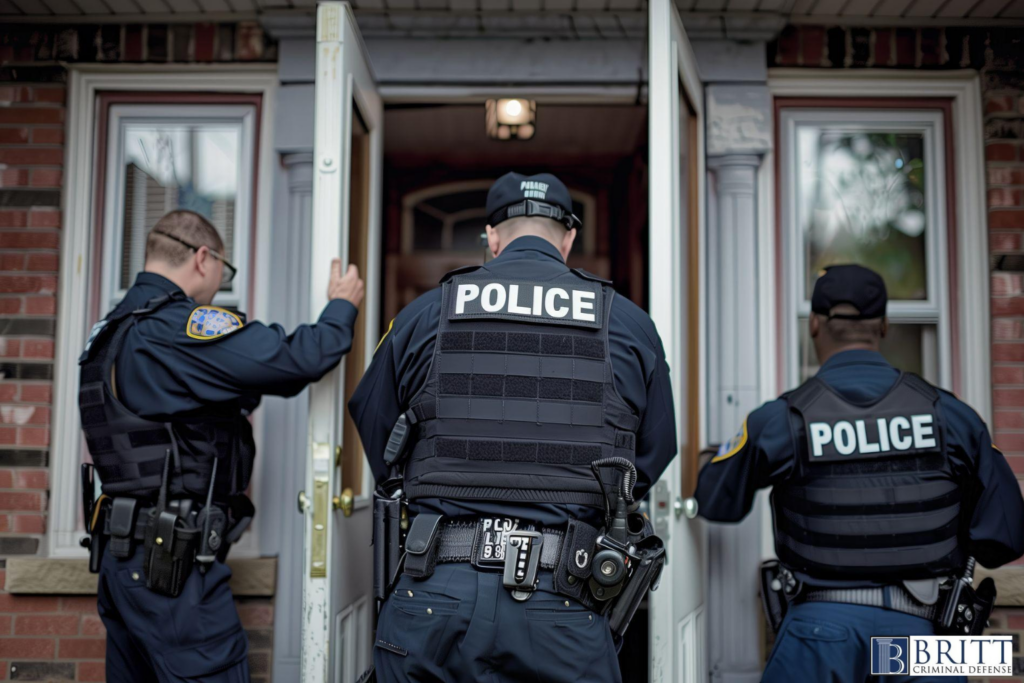
Private residences receive particularly important Fourth Amendment protection. Police generally need judicial authorization or a recognized exception before entering a protected residence. A home search can therefore become a major issue when criminal charges follow a police investigation.
Even when officers possess a valid warrant, they must generally follow its terms. The authorization does not automatically permit officers to search every person, room, container, or object they encounter.
Details surrounding the entry can become important later. These details may include how officers entered, what they announced, what areas they examined, and what they seized. Documenting those circumstances can help an attorney evaluate whether constitutional protections were respected.
7. Improper Searches Can Lead to Evidence Challenges
An unlawful search can affect the strength of the prosecution’s case. The defense may examine whether evidence was obtained through conduct that violated constitutional protections.
A property search can therefore become an important part of the defense investigation. Attorneys may compare police reports with warrants, photographs, recordings, inventory records, and witness accounts.
The goal is to determine whether the government should be permitted to use evidence obtained during the challenged conduct. That analysis can sometimes affect negotiations, motions, or the overall direction of a criminal case.
Protect Your Rights When Police Search Your Property
A search can produce evidence that prosecutors later use to support criminal charges. However, police authority remains subject to constitutional limits.
Britt Criminal Defense represents people facing criminal allegations throughout Maryland’s Eastern Shore. If you believe police entered your home or searched your property unlawfully, preserve relevant paperwork and recordings.
Avoid discussing case details publicly before receiving legal advice. A timely review can determine whether a search warrant or resulting evidence can be challenged. For guidance about your situation, call 443-944-5705 or use the firm’s contact page.
Frequently Asked Questions
Can police search my house without a warrant?
Police may enter a home without prior judicial authorization in certain legally recognized circumstances. The Fourth Amendment generally protects people against unreasonable government searches and seizures.
Recognized exceptions can include voluntary consent and circumstances requiring immediate police action. The specific facts determine whether an exception applies.
Officers also cannot automatically search beyond the authority supporting their entry. If police entered your residence without a warrant, document what happened as soon as possible.
What makes a search warrant invalid?
A search authorization may face a legal challenge when its supporting information does not establish sufficient grounds. Problems can also arise when the authorization fails to identify the place or property involved adequately.
Warrant requirements generally include probable cause and particularity under the Fourth Amendment. Courts can also examine whether officers exceeded the authority granted by the authorization.
Reviewing the affidavit can reveal whether important facts were omitted or unsupported conclusions were presented. The execution of the search may require separate examination. An attorney can review these issues and determine whether challenging the search could affect the prosecution’s evidence.
Can evidence from an illegal search be used against me?
Evidence obtained through an unconstitutional search may be subject to exclusion, depending on the circumstances and applicable legal rules. The defense can examine whether officers had valid authorization, relied on a recognized exception, or exceeded their legal authority.
Evidence suppression may become an issue when the government obtains evidence through an unlawful search or seizure. Suppression does not happen automatically. Courts consider the specific facts and legal arguments presented by both sides.
A defense attorney can review reports, recordings, warrants, photographs, and other evidence. That review can help determine whether a constitutional challenge may be appropriate.